R&D POC: VR Sniper Simulation & Haptic Feedback
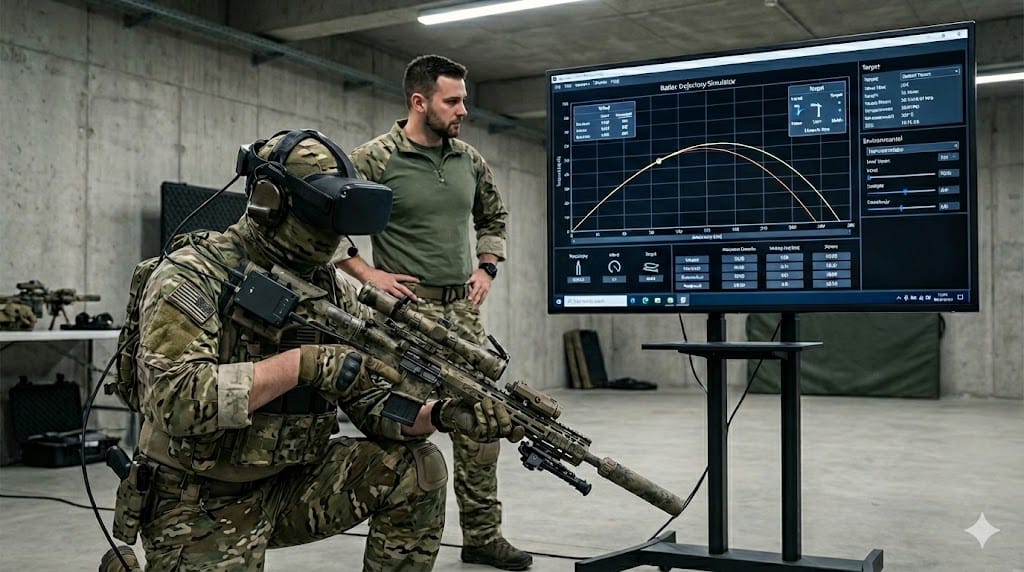
The Problem: High-fidelity VR simulators usually require expensive, specialized hardware. This makes them too costly for mass training.
The Vision I proposed a "Modular Attachment" strategy. My idea was simple: instead of buying fake simulation guns, we would digitize the real service weapons. I designed a concept for a smart sensor unit that clips directly to the weapon.
My Role I led the R&D process from idea to prototype.
- I defined the product requirements.
- I supervised the engineering team to ensure the hardware sensors integrated perfectly with Unreal Engine.
The Value This approach allows soldiers to train with their own assigned rifles. It guarantees 100% realistic ergonomics (muscle memory) and removes the need for expensive custom hardware.
Sniper scope simulation, together with the ballistic module
A hardware component to turn one's own weapon into a digital twin.
The Outcome: The "Modular Attachment" concept was technically validated—the trigger logic and tracking were precise. However, we discovered that standard VR headsets physically obstruct the rifle stock. Strategic Conclusion: While this setup is perfect for CQB (Close Quarters Battle) and tactical drills where the weapon is held loosely, it is currently unsuitable for precision sniper training until headset form factors become significantly smaller.