IoT Prototyping: Building a Drone Fleet Telemetry System with Unreal Engine & n8n

IoT Prototyping: Building a Drone Fleet Telemetry System with Unreal Engine & n8n

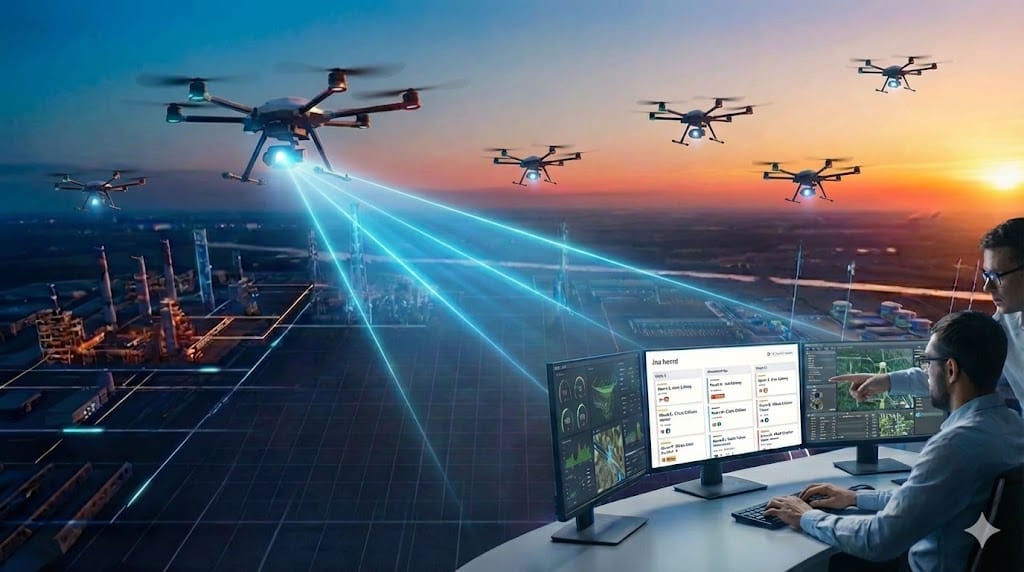
In large-scale commercial drone operations (delivery, agriculture, or surveillance), losing a drone is expensive. But not knowing why it crashed is even worse. Was it a battery failure? Pilot error? Or a firmware glitch?

Manufacturers and Fleet Managers need a reliable "Black Box" system—a way to instantly receive incident data the moment a unit goes offline.

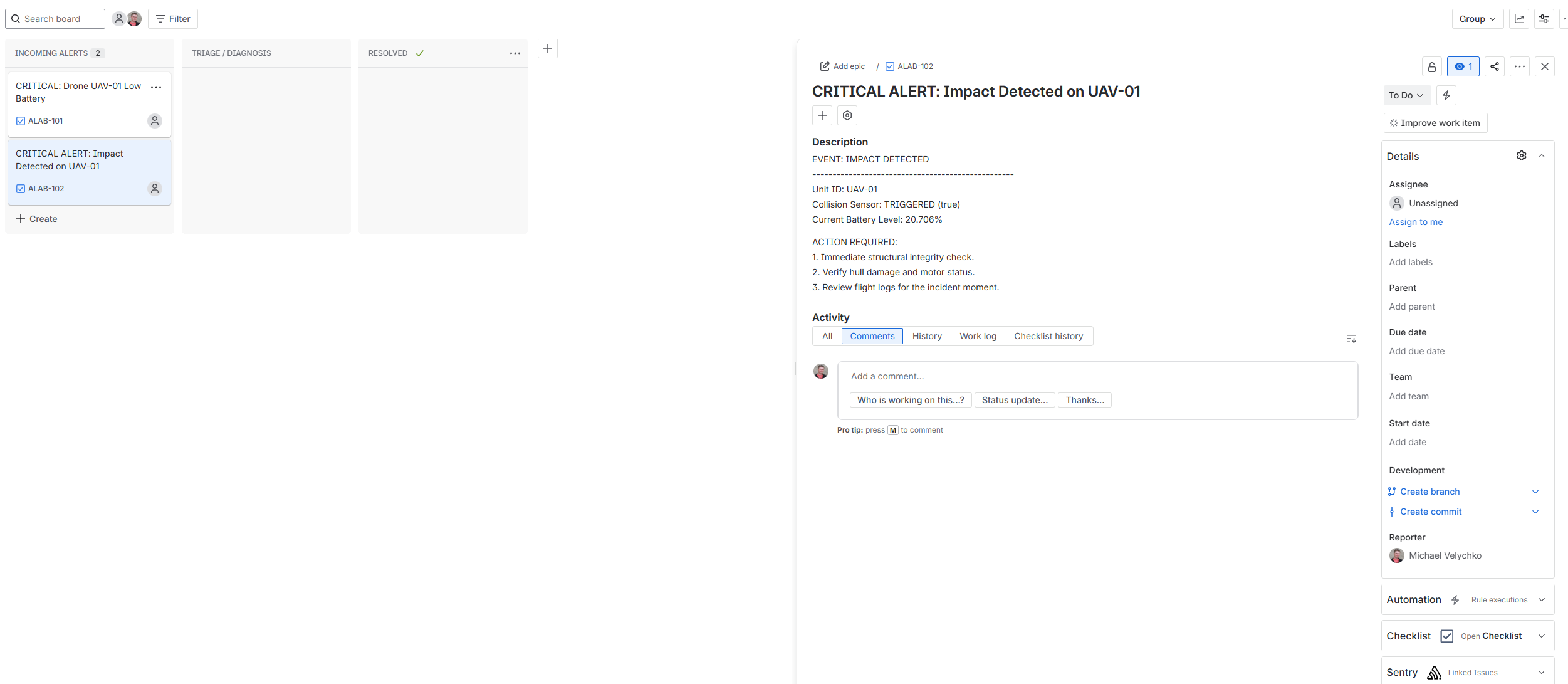
I used Unreal Engine 5 to prototype a Digital Twin of this telemetry system. My goal was to build a logic pipeline that autonomously distinguishes between routine maintenance needs (Low Battery) and critical structural failures (Collision), instantly notifying the engineering team via Jira.

In simulation development, knowing when and why a unit fails is critical. Building a custom backend to track these events usually takes days or weeks. I wanted to demonstrate how to achieve the same result in a fraction of the time by integrating existing powerful tools.

I built a working prototype that tracks two critical states of a drone—Low Battery and Collision—and automatically logs them into a project management system. The goal was to create a functional loop between the simulation and the issue tracker without writing complex backend code.

## The Goal

The system needed to monitor a drone in real-time and react to specific triggers:

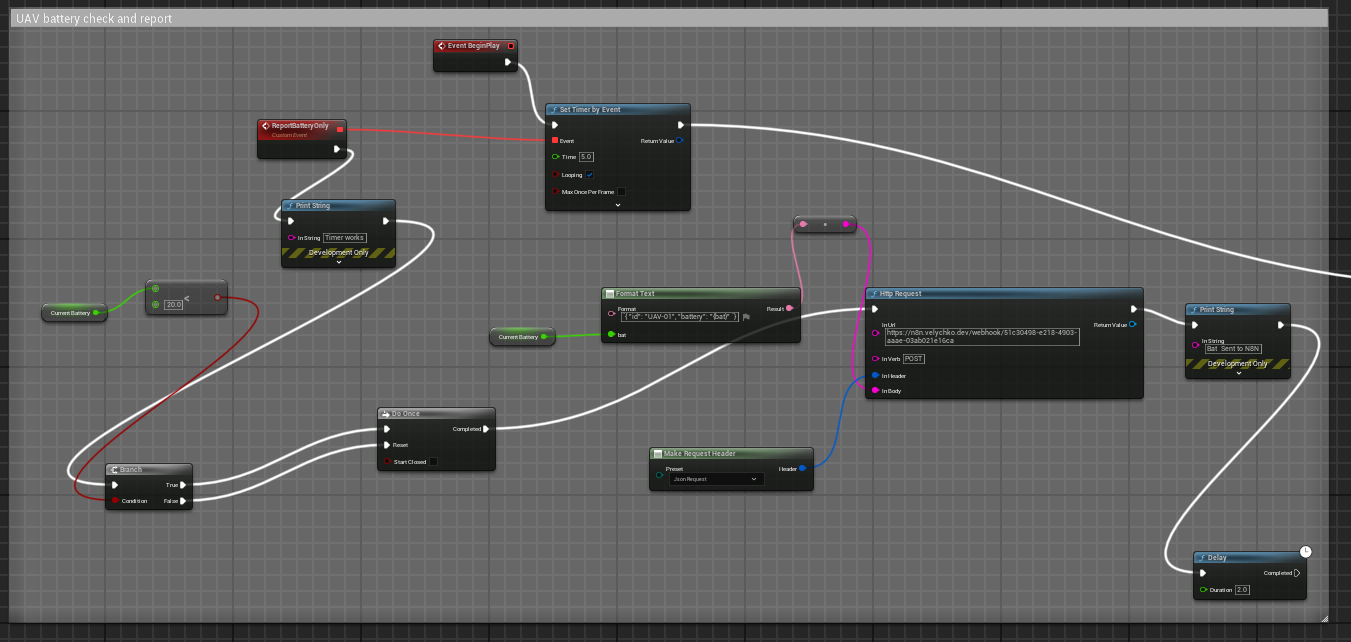
  • Battery Status: If the charge drops below a threshold (e.g., 20%), it must be logged as a "Maintenance Request."
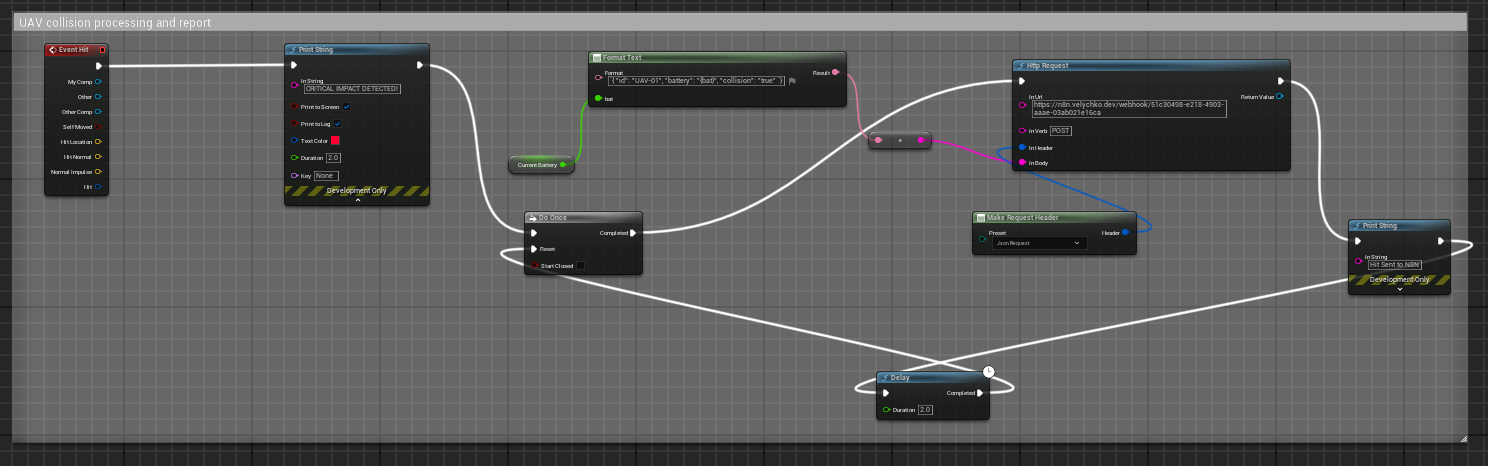
  • Collision Event: If the drone hits an obstacle, it must be logged as a "Crash."

## The Solution: Low-Code Integration

Instead of building a database and an admin panel from scratch, I used a modular architecture:

  • Unreal Engine 5: Acts as the client/sensor.
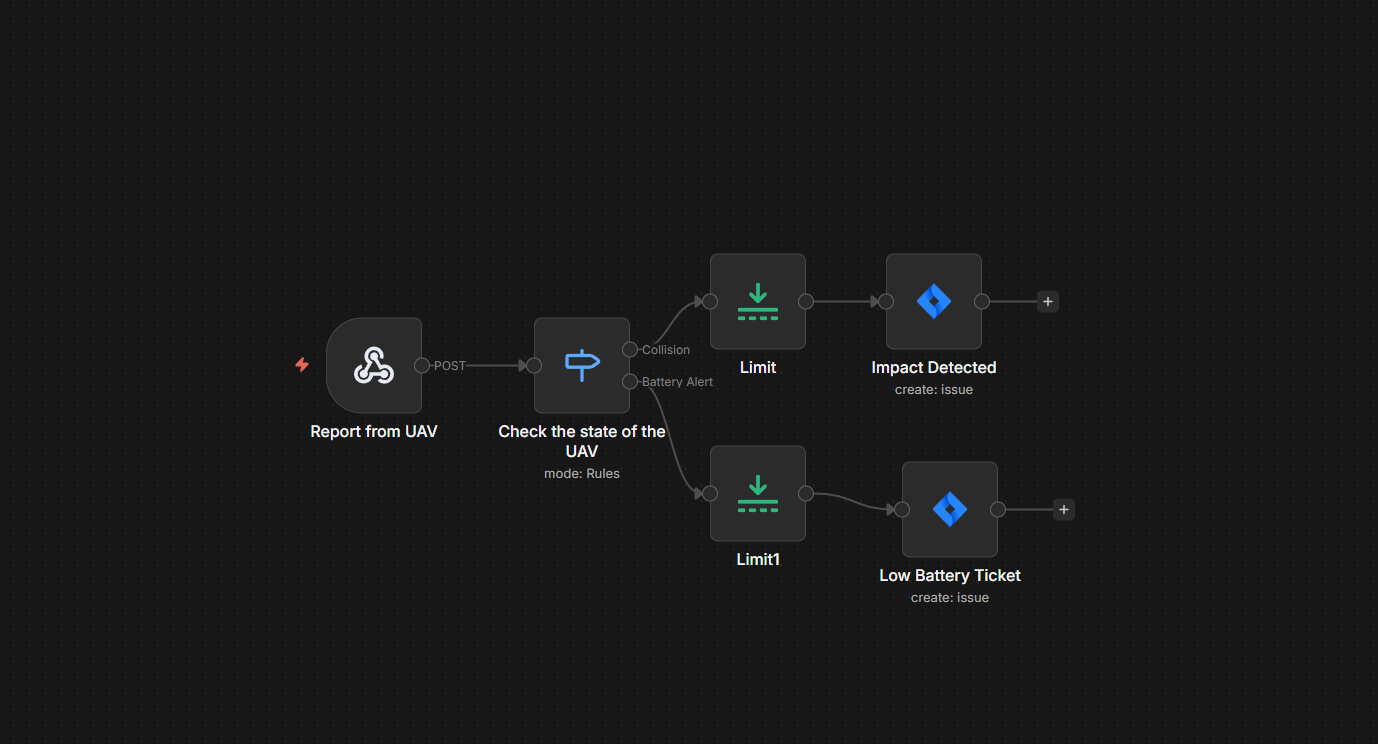
  • n8n: Acts as the middleware (backend logic).
  • Jira: Acts as the database and user interface.

Battery Status: - demo video

Collision Event - demo video
## 🛠 Technology Stack

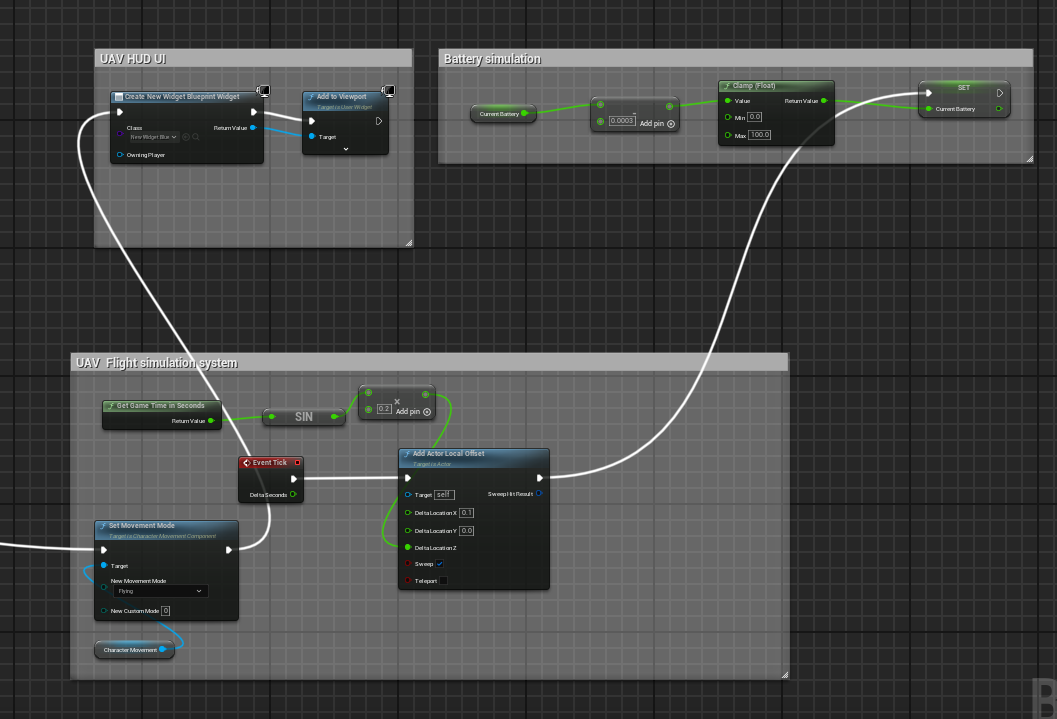
  • Unreal Engine 5 (The Sensor): Simulates 6-DOF physics flight and utilizes the Blueprint HTTP subsystem to serialize telemetry into JSON, firing async POST requests upon impact detection.
  • n8n (The Middleware): Ingests raw Webhook payloads, parses the JSON structure, and executes conditional routing logic to dispatch API calls to the appropriate endpoint.

  • Jira Software (The Database): Serves as the structured backend and UI, managing the lifecycle of incident tickets created programmatically via its REST API.

Why This Approach Matters

This project proves that effective tooling allows engineers to focus on logic rather than boilerplate code. By using Webhooks and Automation:

  • Speed: The entire prototype was deployed rapidly.
  • Scalability: Adding a new event (e.g., "Connection Lost") only requires adding one node in n8n, not rewriting the engine code.
  • Visibility: The team gets instant notifications in Jira, bridging the gap between the simulation and the workflow.